


Everything You Need To Know
myblog
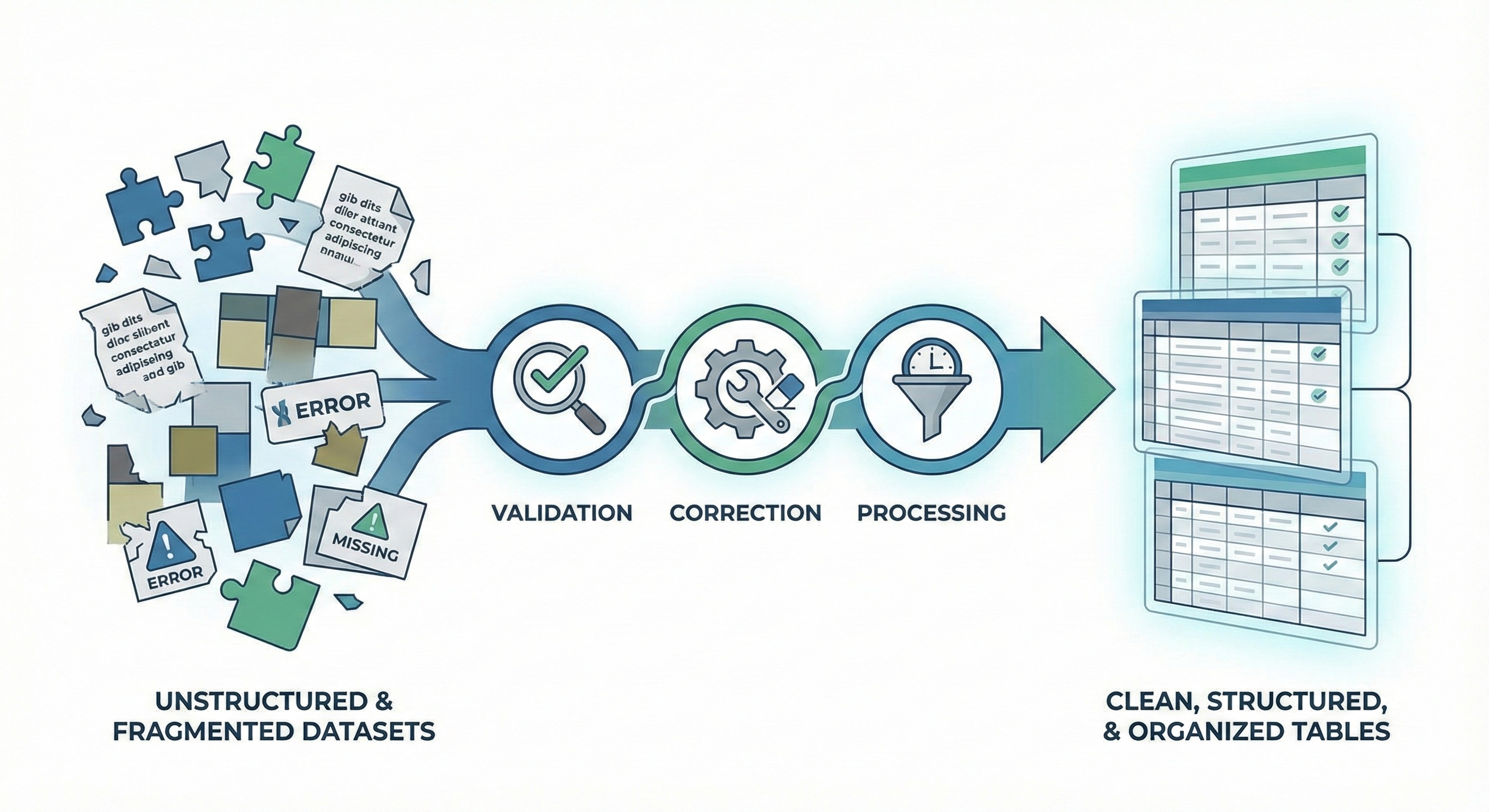
From Data Cleaning to Decision-Making: Ensuring Reliable Insights
Behind every impactful analysis lies a strong foundation of clean and reliable data. While flashy dashboards and predictive models often get the spotlight, the truth is that much of a data analyst’s time is spent preparing the data to ensure accuracy and trustworthiness. This behind-the-scenes work—sometimes called data cleaning or data preparation—is critical for turning raw information into meaningful insights.
Why Data Cleaning Matters
Raw datasets are rarely perfect. They may contain:
Missing values - gaps where data was not recorded.
Inconsistencies - conflicting or duplicated entries.
Errors or outliers - values that don't make sense or distort analysis.
Unreliable sources - data from unverified or incomplete origins.
If left unaddressed, these issues can skew results, lead to incorrect conclusions, and undermine confidence in decisions. High-quality, cleaned data ensures that analyses are accurate, reliable, and actionable.
The Data Preparation Process
Data cleaning involves several essential steps:
Handling missing data - either filling gaps or removing incomplete entries.
Correcting inconsistencies - standardizing formats, correcting typos, and aligning categories.
Removing duplicates - ensuring each record is unique and meaningful.
Validating sources - verifying the reliability and credibility of the data collected.
By systematically addressing these challenges, analysts create a dataset that is ready for deeper exploration, modeling, and visualization.
From Clean Data to Confident Decisions
Once the data is prepared, it can support informed decision-making across industries:
Business: Companies can forecast sales, optimize operations, and identify market opportunities.
Healthcare: Providers can track patient outcomes, improve treatments, and allocate resources effectively.
Research: Scientists can detect trends, test hypotheses, and make evidence-based conclusions.
Policy-making: Governments and NGOs can design interventions, allocate resources, and track outcomes with confidence.
High-quality data acts as a trusted foundation. It ensures that insights are not only visually appealing or statistically significant—they are credible and actionable.
Building a Culture of Data Excellence
Organizations that prioritize data quality gain a competitive advantage. They spend less time questioning results and more time acting on insights. Moreover, clean data fosters transparency, accountability, and trust, both internally and with external stakeholders.
In essence, data cleaning is not just a technical step—it is the cornerstone of effective analytics and smart decision-making. Without it, even the most sophisticated models and dashboards can produce misleading conclusions. By investing in data preparation, organizations turn raw information into a reliable engine for insight, strategy, and real-world impact.
Leave your Review
Loved this? Let the world know!